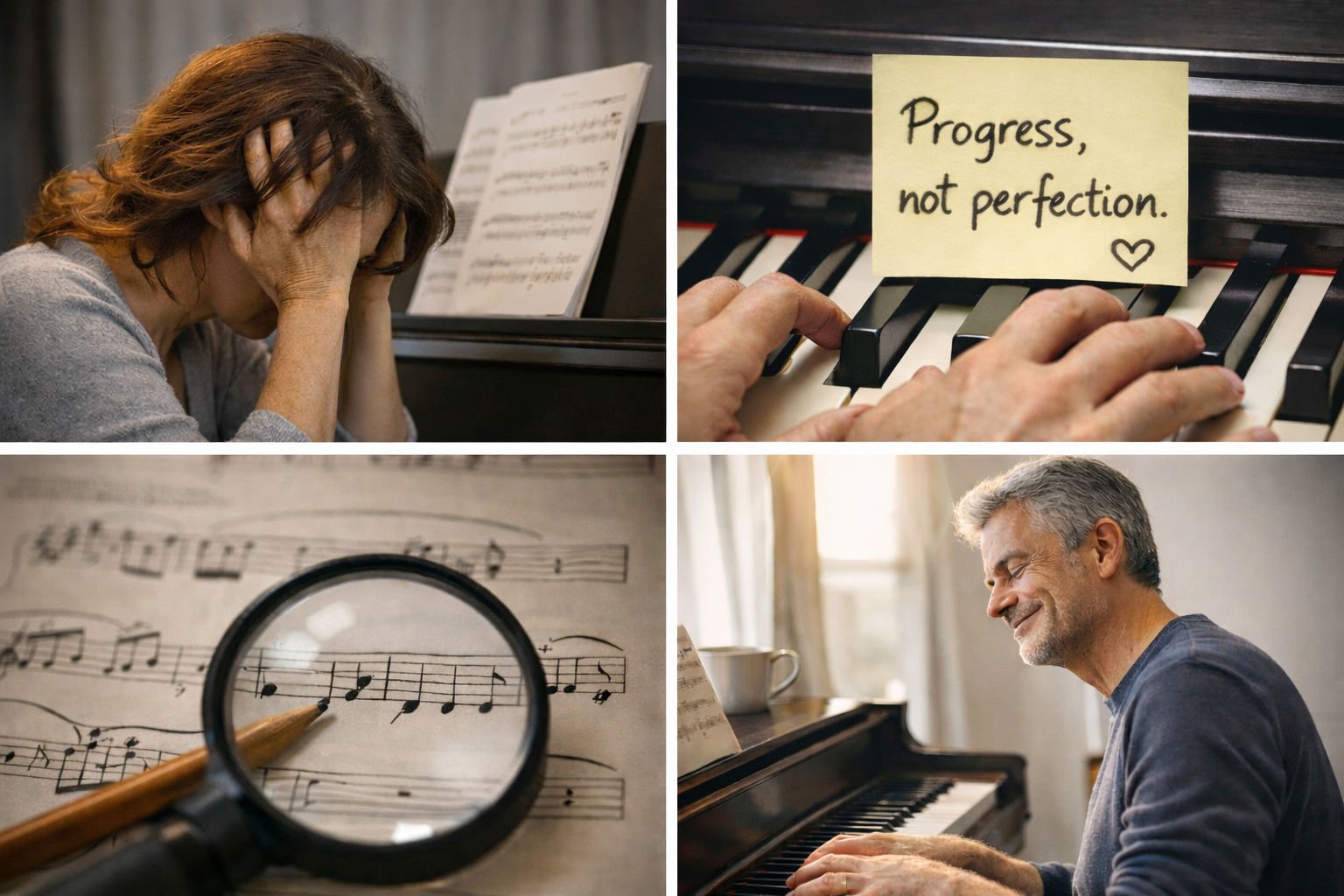
If I Could Change One Thing for Adult Pianists Would Be: Progress Without Frustration
If I could change one thing for adult pianists, it would be this:
I would mentally prepare myself, that progress could take much longer . The feeling of frustration would come for sure, I would remind myself that I have to keep going no matter what.
Not because adults are incapable. Not because they “started too late.” And definitely not because they lack discipline.
But because most adult pianists follow a system that was never designed for them.
As someone who works with adult pianists—especially those returning after years away—I see the same pattern over and over again. Most talented musicians who know how music should sound, never like what comes out of their hands.
The gap between musical imagination and physical execution becomes exhausting.
Unfortunately, many adults conclude: This isn’t for me anymore.”
That’s the real tragedy.
The Problem Isn’t Your Skill — It’s the Type of Progress
Most adult pianists don’t lack ability. They never have a chance to hear a positive feedback that is encouraging instead of punishing.
Traditional piano training often measures progress like this:
- Playing Faster tempos
- More difficult repertoire
- Fewer to no mistakes
But adult learners experience progress very differently.
They come back to the piano after many years, or have an interest of learning piano in the first place, because:
- “They feel more in control of their lives.”
- “They want to accomplish a dream they’ve always had.”
- “They’re enjoying playing again?”
Improvement feels invisible, which leads to frustration. Eventually — since you’re not seeing any progress happening you quit.
Why Adult Pianists Get Stuck in Frustration Cycles
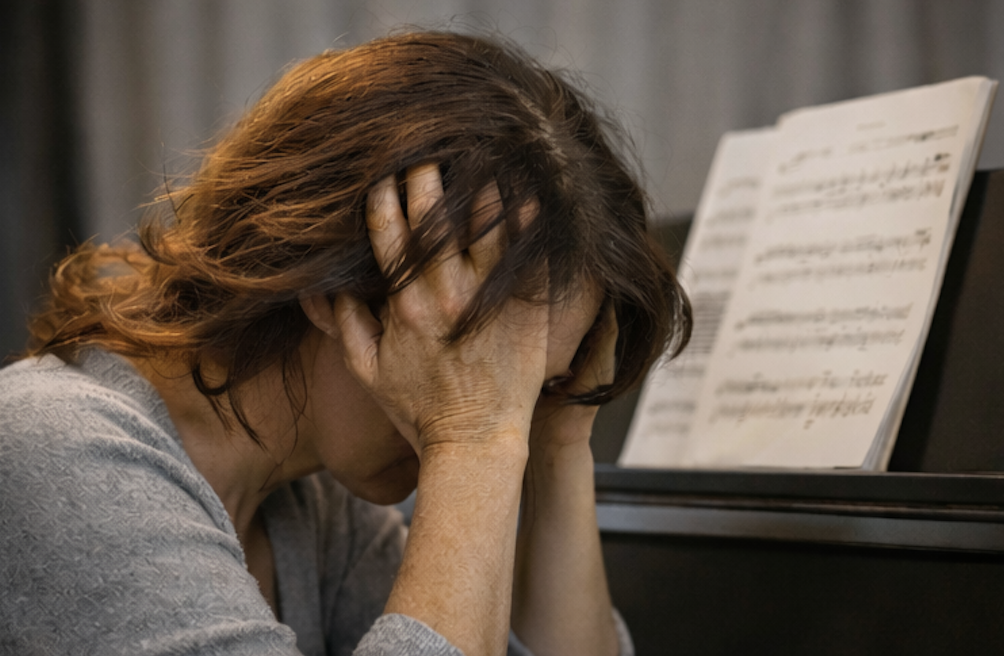
Here’s what I see most often:
- Adults over-practice determined to “fix everything” in one session. This leads to mental overload and physical tension.
- Adults in general are more judgmental towards themselves and others. They set unrealistic standards and compare today’s playing to:
- Their teenage ability
- Concert recordings
- What they think they “should” be able to do
- They assume mistakes as failures and take it personal. But mistakes are not the enemy. Unclear goals are.
What Your Expectations Should Be for Adult Pianists
You have to focus on small progress that bring meaning and joy instead of stress.
Real progress often looks like:
- More confidence before playing
- Less perfection on first attempts
- Faster recovery after mistakes
- Better technique and comfort at slower tempos
- Reduced anxiety when starting a piece
These wins are subtle—but powerful.
If adult pianists learned to track control, clarity, and confidence, frustration would drop almost immediately.
One Shift That Changes Everything: Starting Small
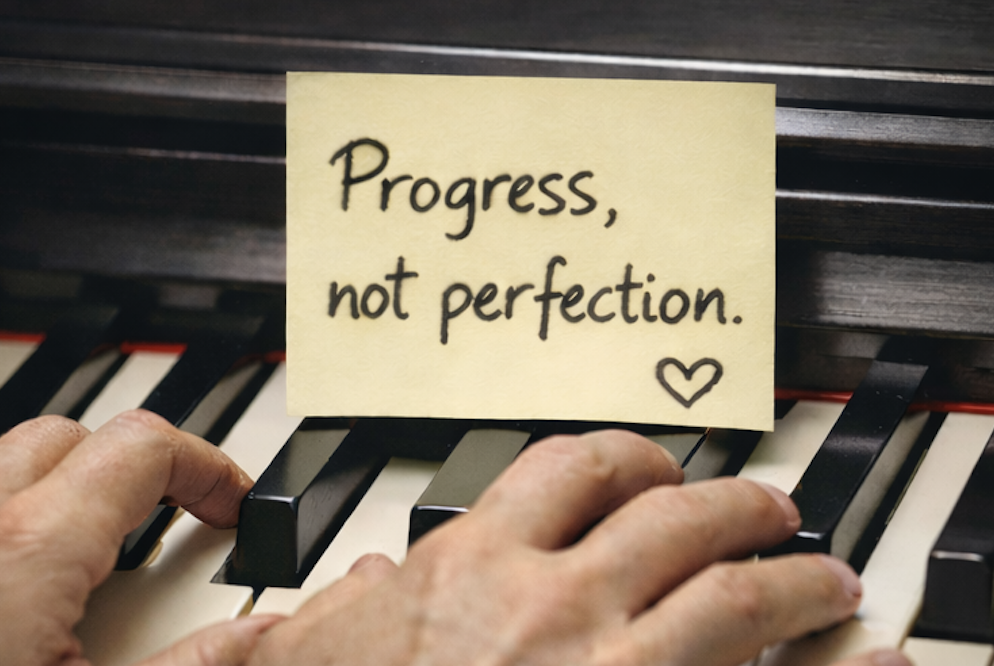
If I could give adult pianists one gift, it would be permission to focus on starting small.
Starting small means:
- Focusing on one bar instead of the whole page
- Working on more challenging transitions instead of the entire piece
- Training one skill per session instead of ten
When progress becomes noticeable, your motivation to return every day will become frequent.
And once motivation returns? Consistency follows naturally.
Practice Should Restore Energy — Not Drain It
Adult pianists often practice after long workdays, family responsibilities, and mental fatigue.
Practice should:
- Calm the nervous system
- Rebuild trust in the hands
- Create a sense of safety at the keyboard
If practice leaves you feeling tense, defeated, or rushed—it’s not a willpower problem. It’s a design problem.
Decide for Yourself What Success at the Piano Means To You

Success isn’t:
- Playing faster every week
- Learning only harder pieces
- Being always perfect
Success is:
- Feeling joy when you sit down
- Having a proper and accurate technique when you practice.
- Ending sessions feeling capable—not discouraged
Progress without frustration is possible—but it requires a realistic goal and expectation on your end.
What I’d Change, If I Could
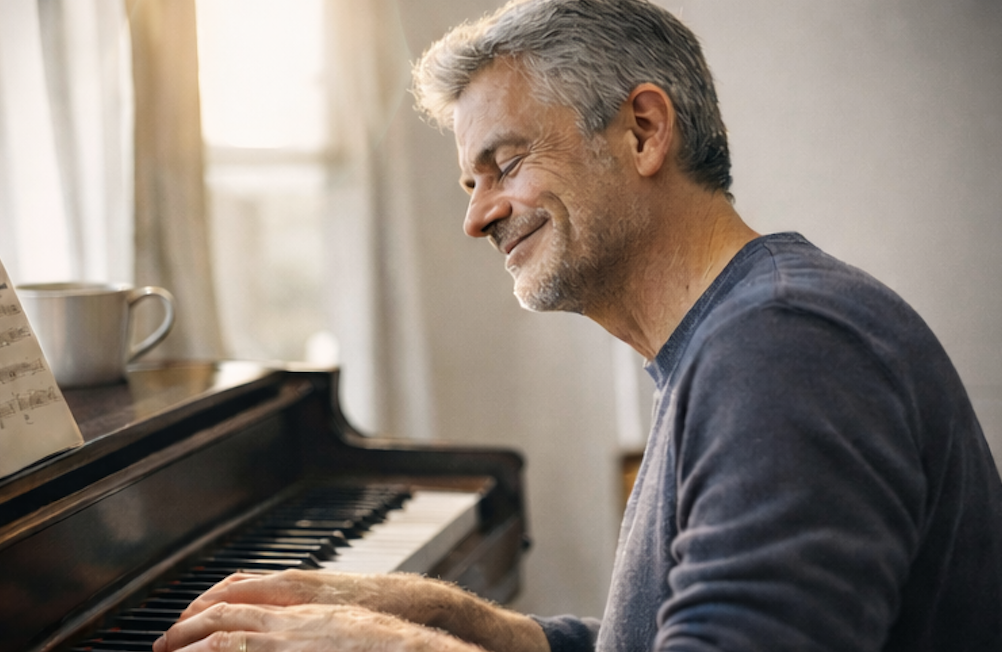
If I could say one thing to encourage any adult pianists, it would be this:
Be kinder to yourself as you embark on this journey.
Kind to your time. Kind to your nervous system. Kind to the life you already live.
You don’t need to practice more. You don’t need more talent. You need a system that respects how adults actually learn.
And when progress finally feels supportive instead of punishing, the joy of playing comes back.
That’s when everything changes.